The first-step routine
First-step pain in the morning is one of the most recognisable patterns in heel pain. The stiffness has a plausible explanation — connective tissue stiffens when it sits still and loosens again with movement. Warming it up before it takes your weight makes those first steps easier.
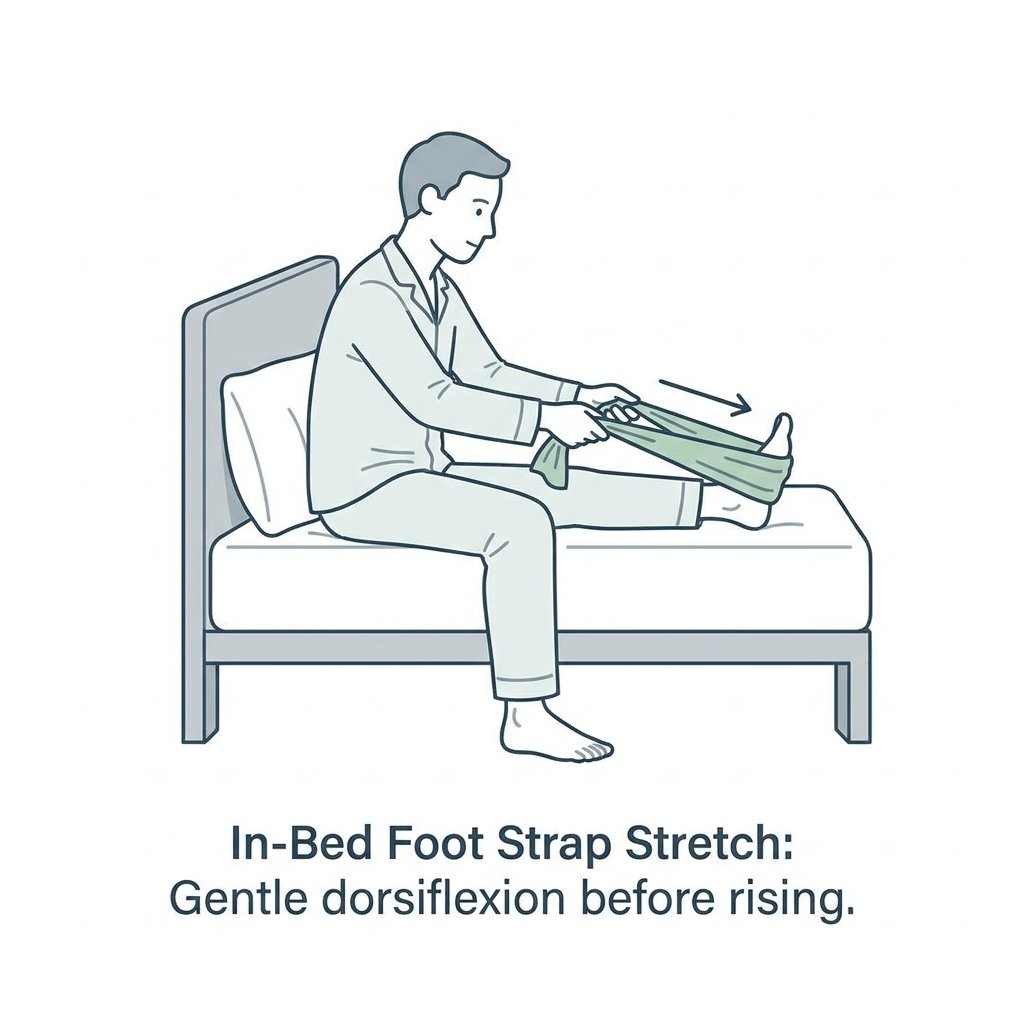
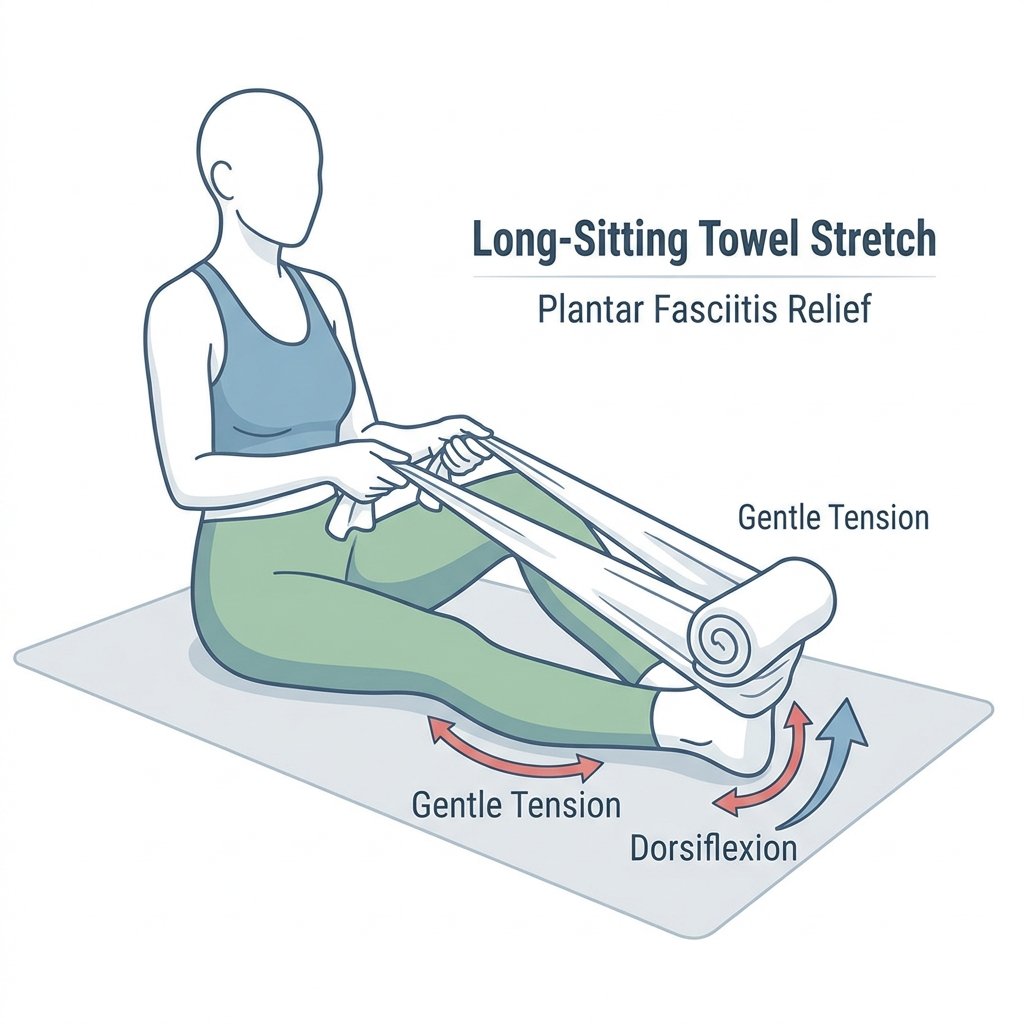
Towel or strap calf stretch
- Sit up in bed with the sore leg straight out in front of you.
- Loop a towel, belt or strap around the ball of your foot.
- Pull gently towards you until you feel a clear stretch in the calf and arch.
- Hold, relax, repeat.
Keep the knee straight so the stretch reaches the upper calf. A clear stretch, never sharp pain — and no bouncing.
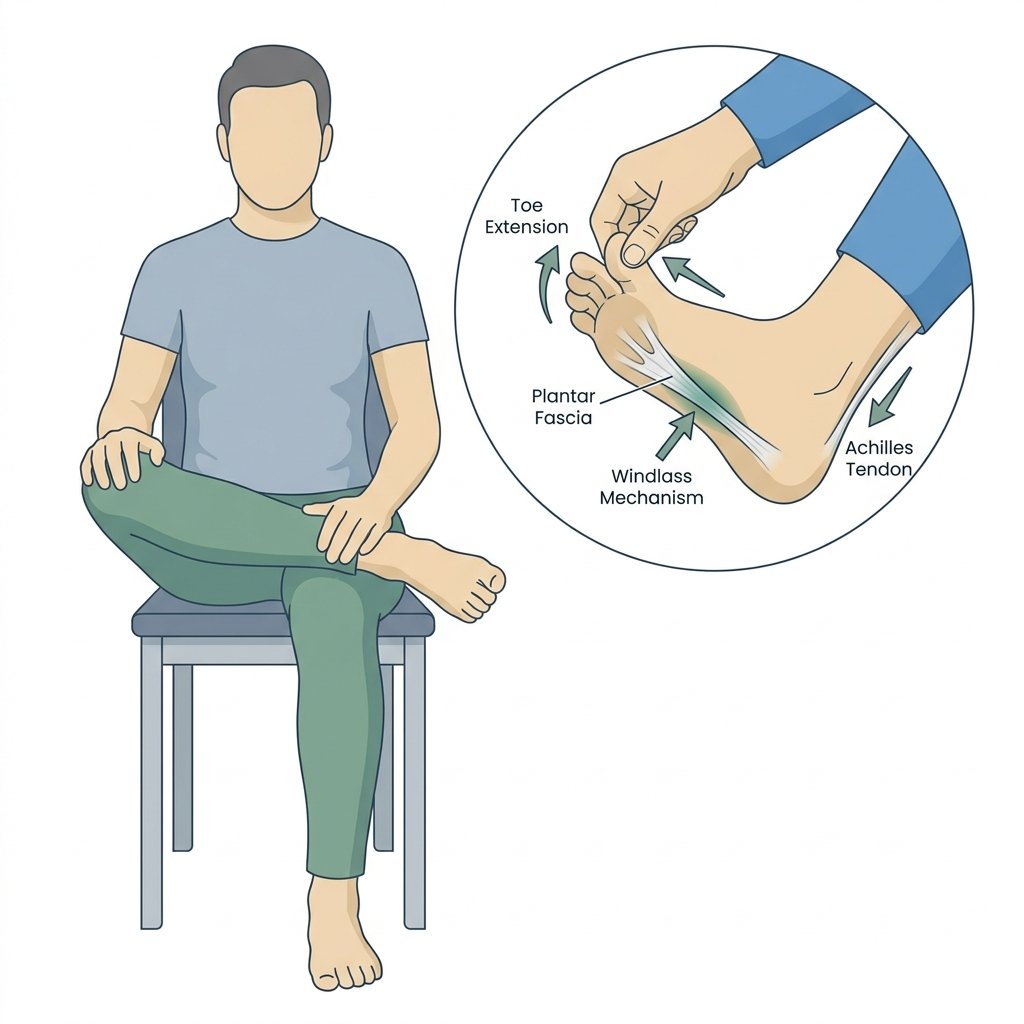
Plantar fascia stretch (figure-4 toe pull)
- Sit on the edge of the bed and cross the sore foot over the opposite knee.
- Grip your toes — especially the big toe — and pull them back towards your shin.
- Run your other hand along the sole: you should feel the band go firm.
- Hold, release, repeat.
Pulling the toes back winds the plantar fascia taut — the windlass mechanism — so you're stretching the band itself, not only the calf. This is the stretch with the most direct trial evidence behind it. Most people under-do it: count the full ten seconds.
Your first steps
If it helps, keep cushioned slippers or comfortable shoes by the bed and step straight into them. Many people find the first steps gentler that way.
That's a comfort choice, not a rule. A hard floor won't damage your foot — the first steps may just be sorer. If the first few steps still hurt, walk slowly for a minute; it usually eases as you move.
Getting through long standing and busy days
Standing still is often harder on a sore heel than walking. These small changes give it a break without stopping your day.
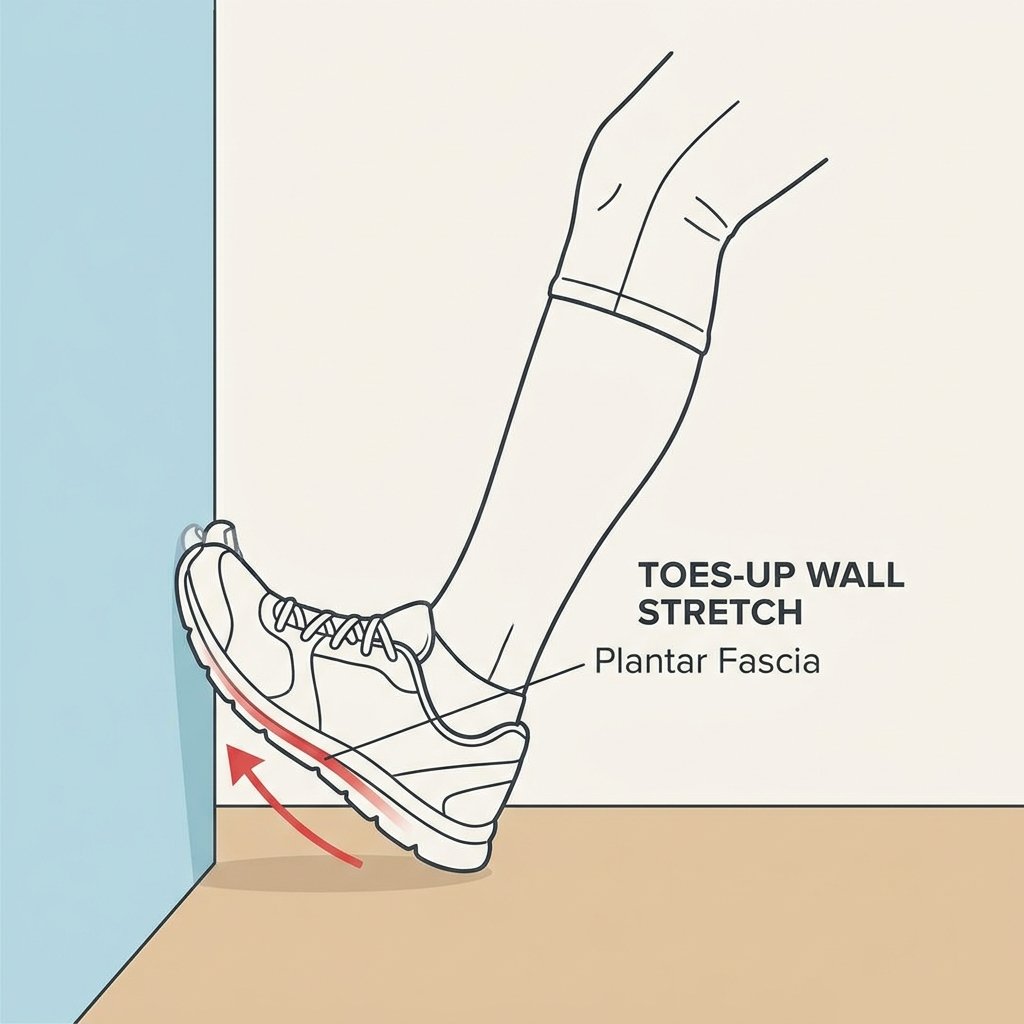
Toes-up wall stretch
Stretches the arch and calf together — handy at work or mid-walk.
Toes up against a wall, heel on the floor, lean in gently. About 30 seconds, a few times.
Shift the load
Alternate feet, rest one foot on a low step, rail or box, and sway gently rather than standing locked still.
Curling or scrunching your toes for a few seconds can also bring relief — it moves pressure off the heel and switches on the small muscles under the arch.
Short movement breaks
Swap standing time for a minute of walking, or a few slow heel raises, every so often.
Many people can walk far longer than they can stand still. Break long standing into shorter blocks where you can.
Softer surface, cushioned shoes
An anti-fatigue mat at a counter or workstation, cushioned house shoes, a heel cup or soft insole.
These reduce what reaches the heel. Keep what helps you — there's no single correct shoe or insole.
Settling a sore heel
Comfort tools for after a long day on your feet. Keep the ones that help you, and drop any that consistently make things worse.
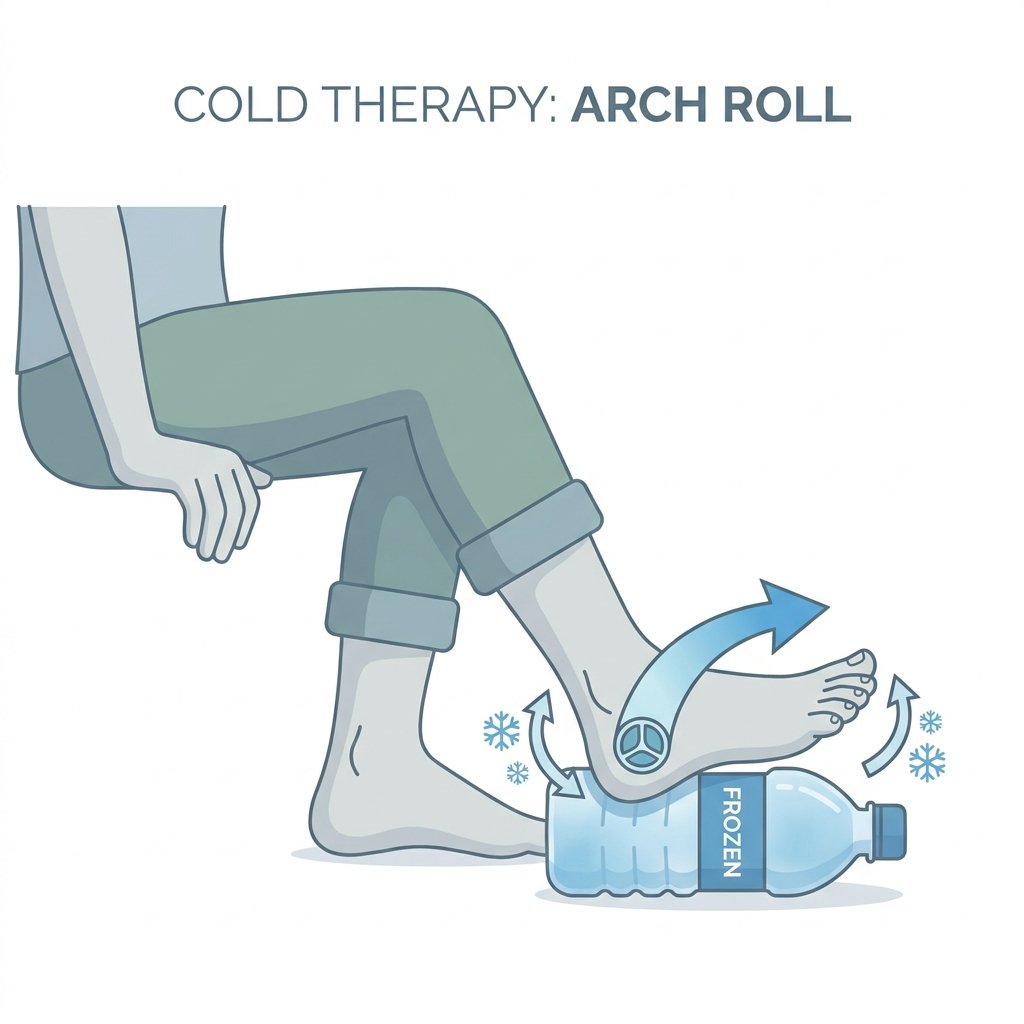
Frozen bottle roll
Short-term pain relief after activity. Cold eases soreness; it doesn't heal tissue.
Seated, roll the arch slowly over a frozen water bottle with light pressure for 5–10 minutes. Stop if the skin goes numb.
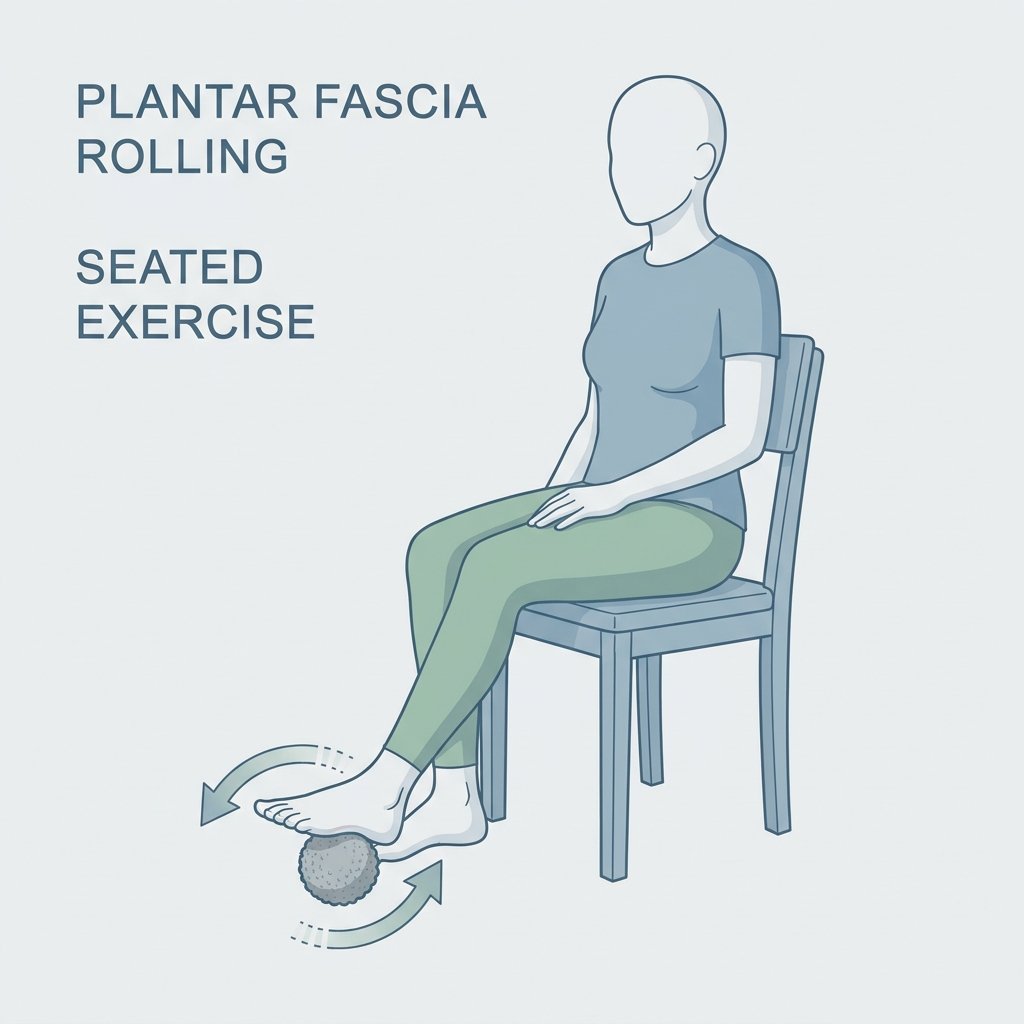
Ball arch roll
A gentle massage for a tight, tired arch. Reviews disagree on how much it helps — try it and see.
Seated, roll a tennis or massage ball from heel to ball of the foot for 1–2 minutes. Comfortable pressure only.
Heat for stiffness
Some people prefer warmth, especially when the foot feels stiff rather than sore.
A warm pack or warm foot soak for 10–15 minutes. "Heat makes it worse" isn't a rule — use whichever feels better.
Night splint
Holds the ankle gently flexed overnight. Suggested only for people with consistent first-step morning pain.
A subgroup recommendation, not a general one. Worth discussing with a clinician before buying.
Relief today, capacity next month
Everything on this page does one job: making today more manageable. It's worth doing. But none of it builds the capacity that lets your foot tolerate more — and that's usually the part that was missing.
This page — free
- Takes the edge off first steps and long days
- Relief is real, but temporary — stretch benefits fade within about twenty minutes
- Judge each tool by whether it makes the moment easier, not by whether it cures you
What builds capacity
- Progressive loading — the heel-raise ladder and the towel protocol
- One change at a time, read against your next-morning response
- A graded return to walking, standing, sport and travel